Research
From two-phase cooling of AI hardware to heat recovery and reuse
Our current research centers on thermal management for AI and data centers. The scientific basis is our long-standing work on gas-liquid two-phase flow and phase-change heat transfer, including boiling, evaporation, and condensation.
We study problems across several scales: cooling high-power CPUs and GPUs, understanding bubbles and thin liquid films, improving heat pumps and frost control, and making better use of the heat recovered from cooling systems.
|
01.Next-Generation Cooling for AI and Data Centers
Data Center Cooling
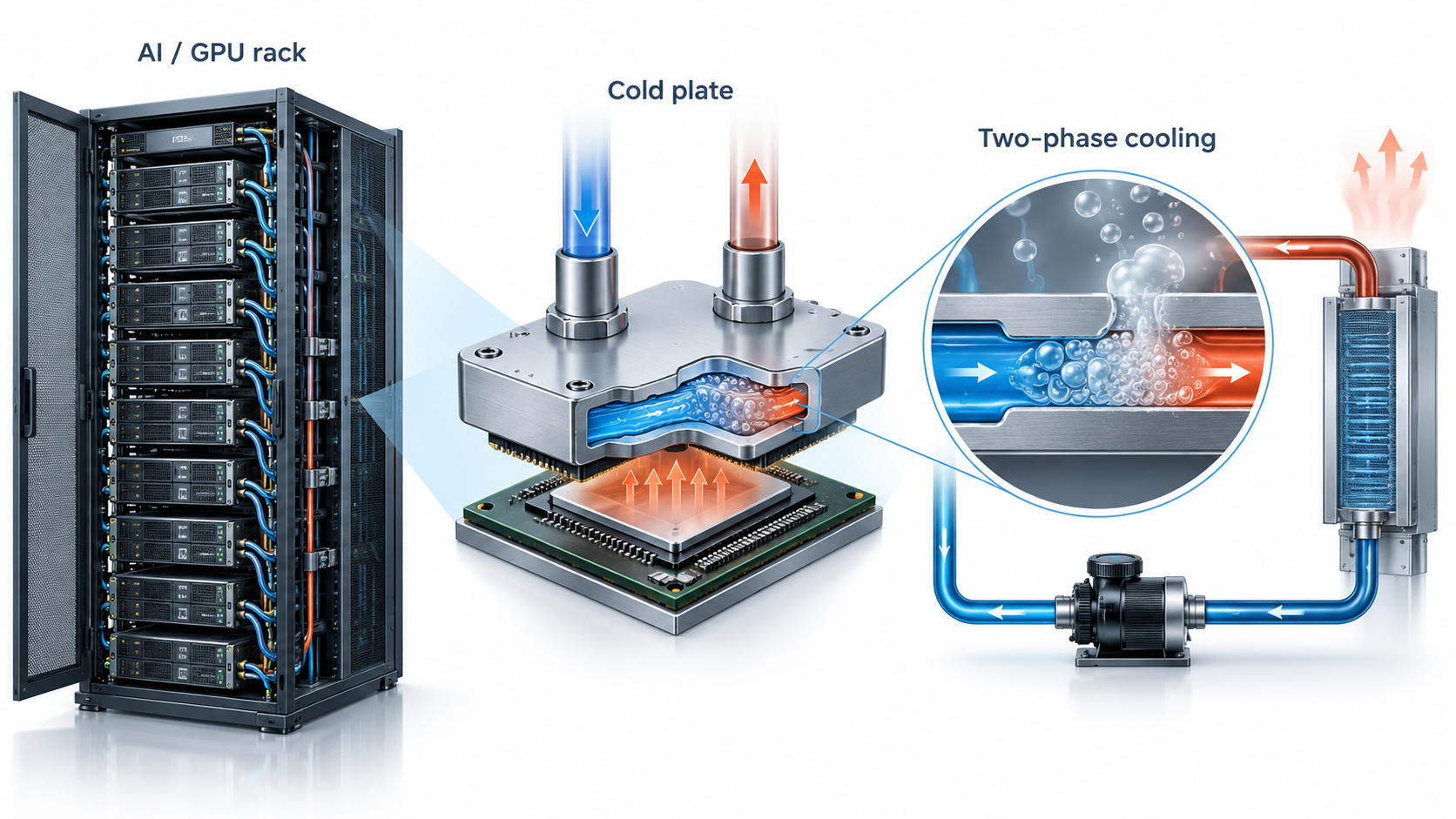
The heat generated by AI and HPC processors continues to rise. Direct liquid cooling is now widely used, but at still higher heat loads, two-phase cooling can use latent heat to remove large amounts of heat without simply increasing the liquid flow rate.
We study radially expanding-channel cold plates designed to reduce pressure drop, backflow, and flow instability during boiling. Current work also includes series and parallel cold-plate arrangements for multiple CPUs and GPUs, two-phase inlet conditions, immersion cooling, and local cooling inside 3D semiconductor packages.
Related research »
|
02.Self-Pumping Boiling
Self-Pumping Boiling
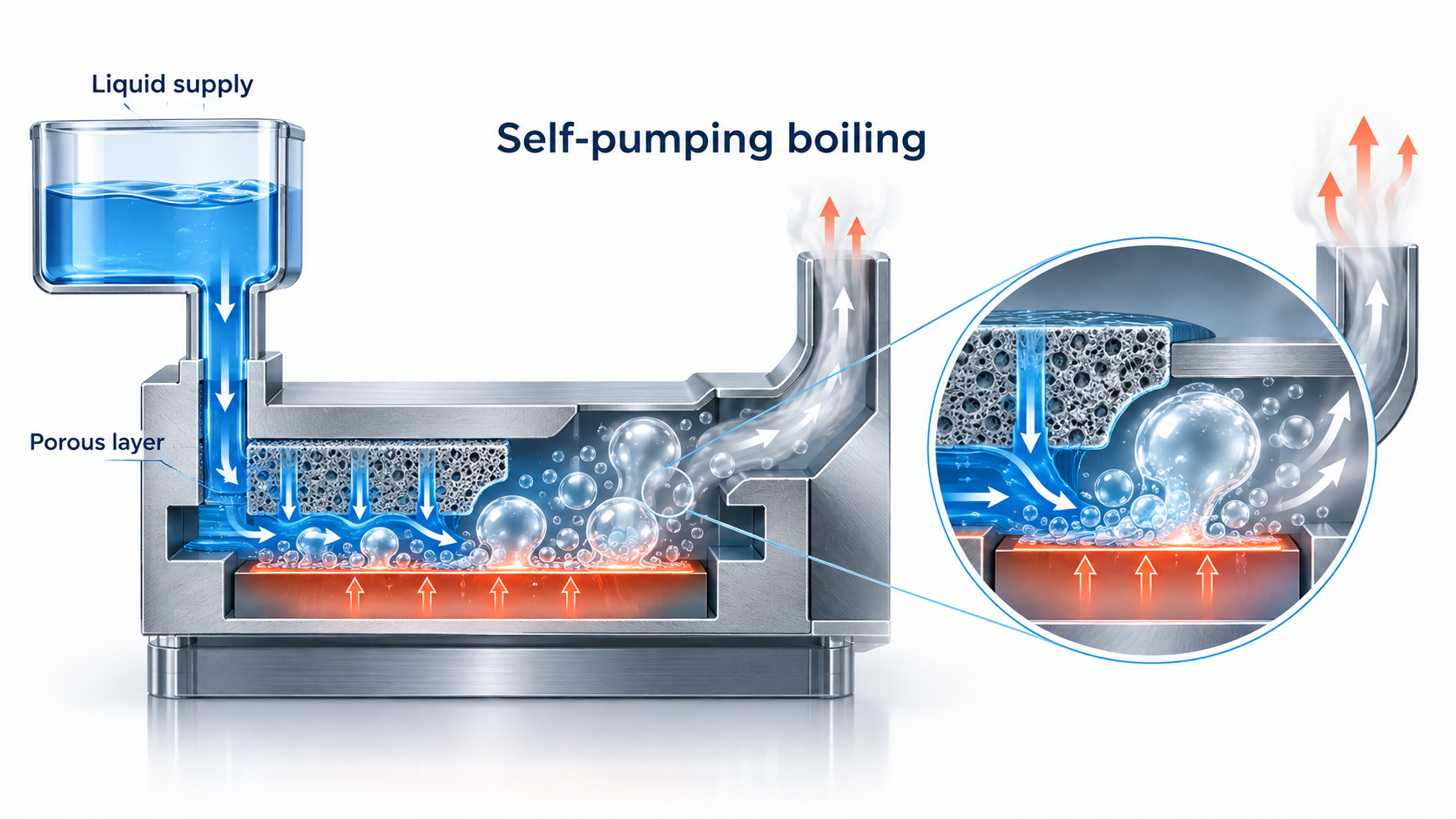
We use the pressure changes caused by bubble growth and expansion to draw liquid through a porous layer toward the heated surface. Separating the paths for vapor removal and liquid supply helps keep the surface wetted at high heat flux.
Related research »
|
03.Two-Phase Flow, Phase Change, and Heat Transfer Surfaces
Two-Phase & Phase Change
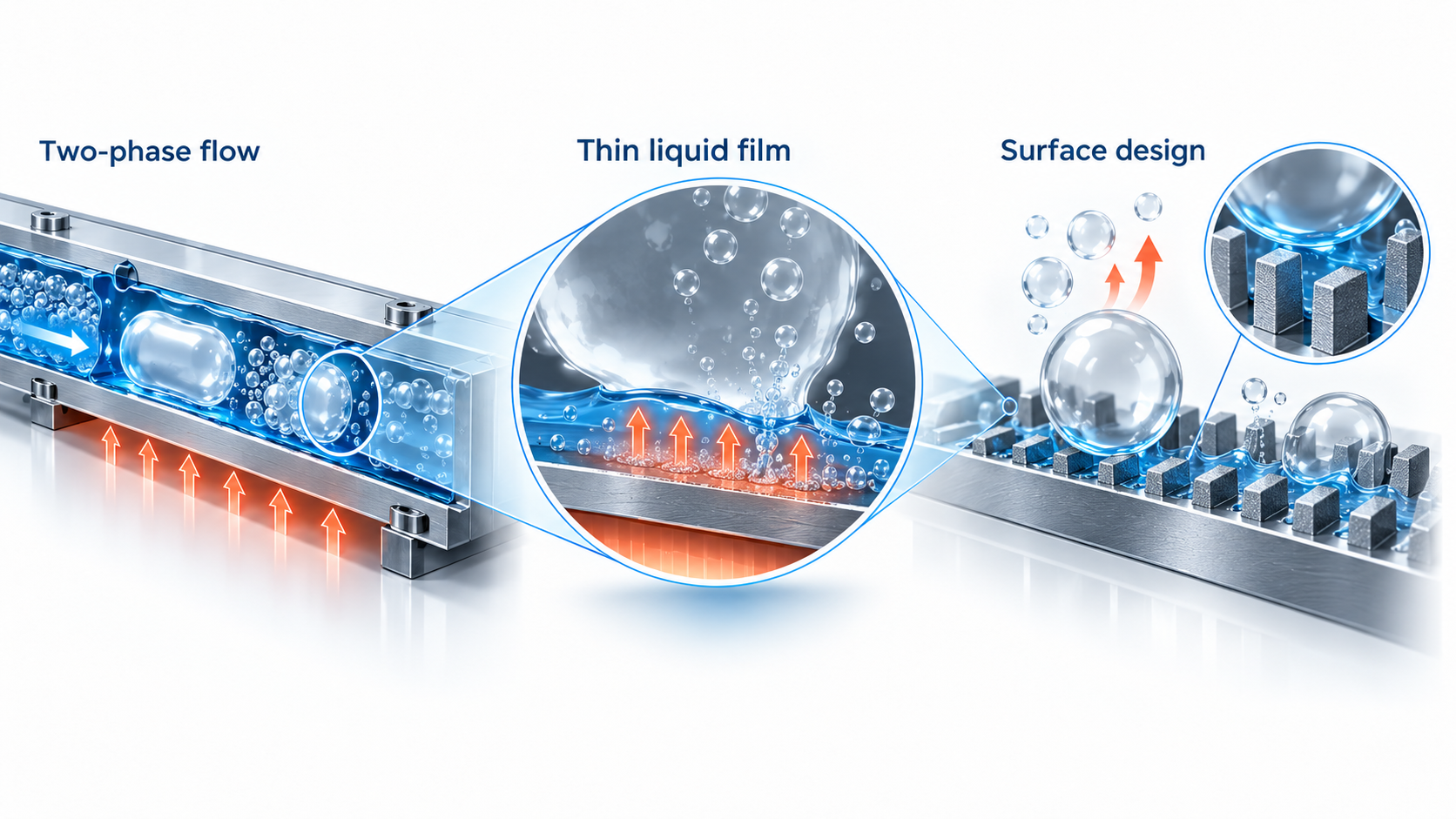
We investigate flow boiling, pool boiling, slug flow, thin liquid films, and condensation using high-speed visualization, temperature and pressure measurements, and numerical analysis. Wettability, surface structures, porous materials, and fluid properties are key variables in this work.
Related research »
|
04.Heat Pumps and Frost/Defrost Control
Heat Pump & Frost
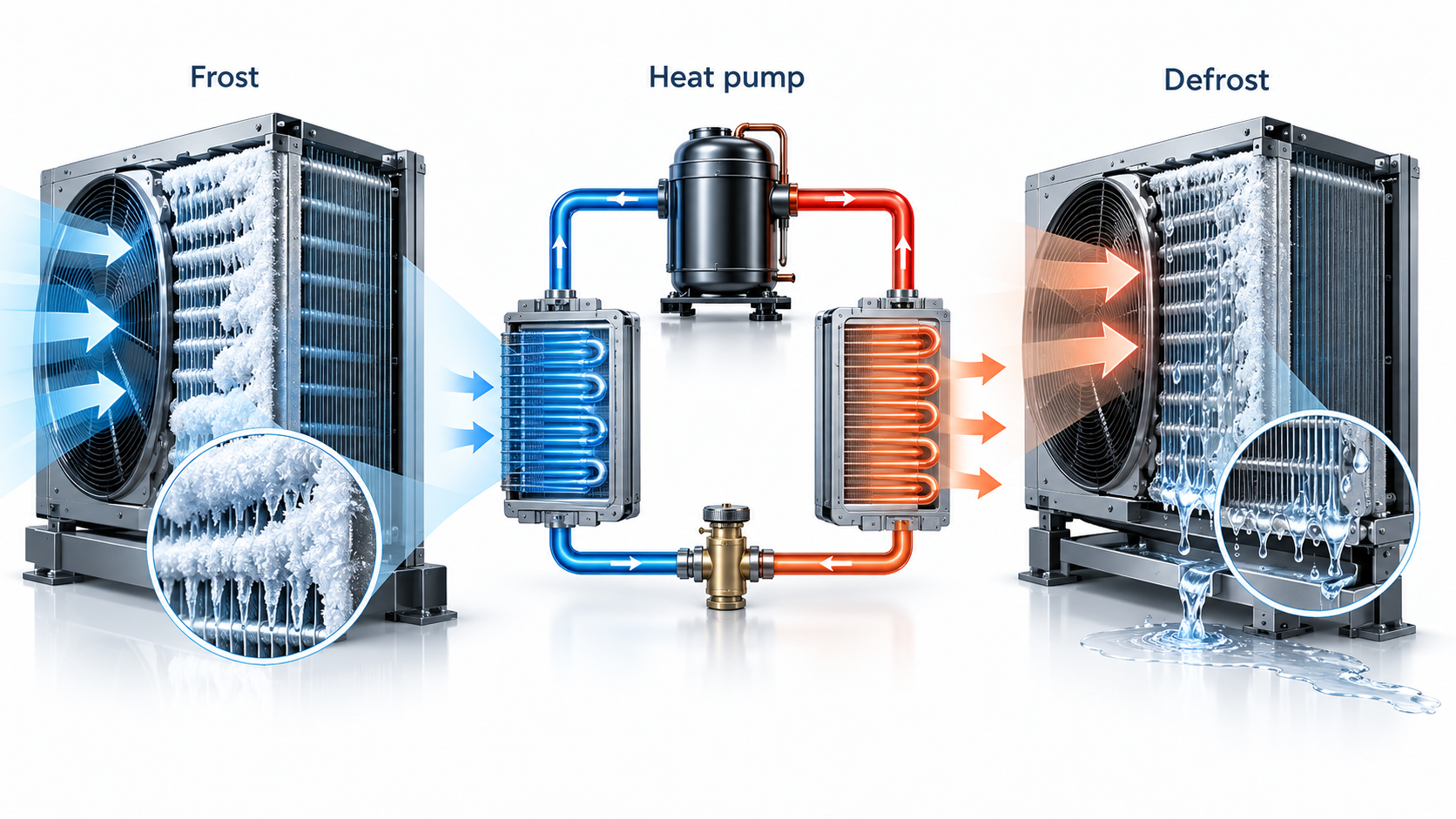
We study boiling and condensation of low-GWP, natural, and mixed refrigerants, together with frosting and defrosting of air-source heat exchangers. Surface wettability and microstructures are also used to control frost growth and meltwater drainage.
Related research »
|
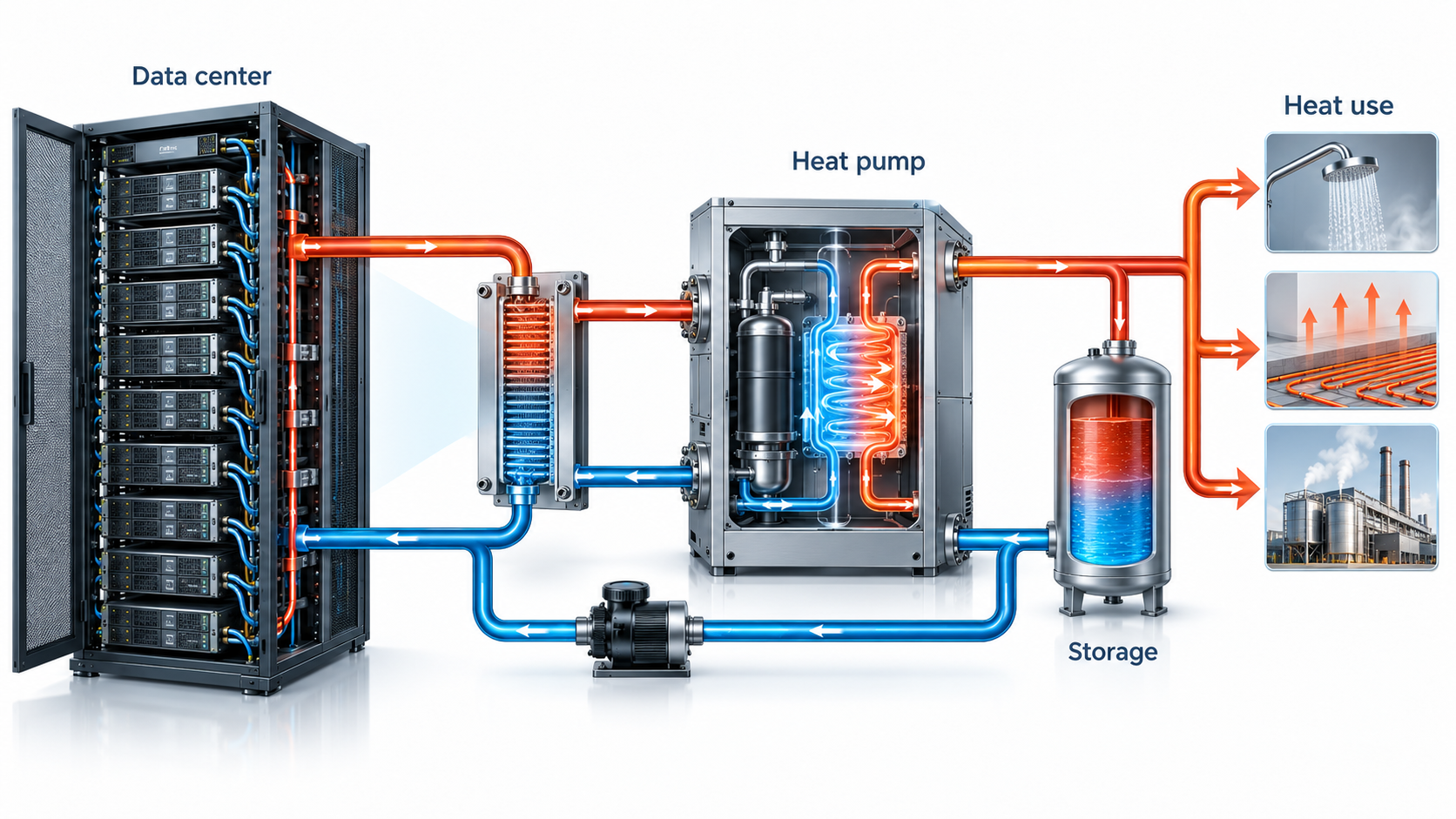
05.Data-Center Waste Heat and Unused Heat
Waste Heat Utilization
Heat recovered from liquid-cooled data centers can be upgraded by heat pumps and used for hot water, space heating, or industrial processes. We also study thermal storage and adsorption/desiccant materials to match recovered heat with heat demand.
Earlier related research »
|
How the topics connect
These topics are closely connected. Data-center cooling is the main application. Two-phase flow and self-pumping boiling provide the underlying cooling physics, while heat pumps and thermal storage provide a route for using the heat after it has been removed from the electronics.